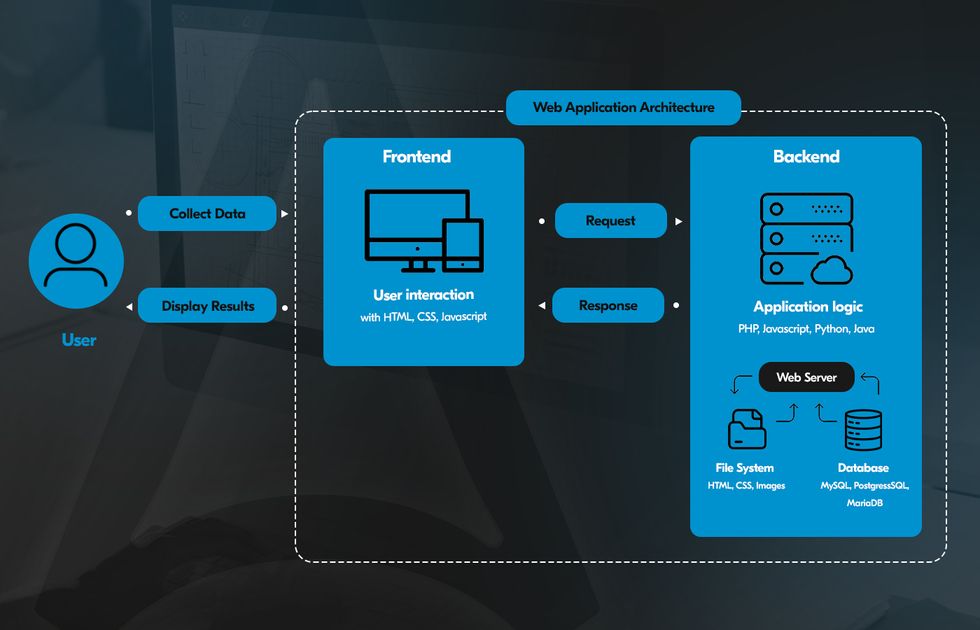
A comprehensive explanation of modern web architecture approaches used in scalable, maintainable web platforms.
Introduction
Modern web architecture has evolved far beyond traditional monolithic web applications. Today, web platforms are designed to be scalable, performant, secure, and highly adaptable, leveraging innovations like serverless computing, edge functions, microservices, Jamstack, and API-first approaches. This transformation enables organizations to deliver fast, reliable, and globally accessible user experiences while supporting rapid development and frequent updates.The goal of modern web architecture is to separate presentation, business logic, and data layers, enabling teams to iterate independently, optimize performance, and scale efficiently. By adopting modular and decoupled architectures, developers can focus on delivering features faster, improve maintainability, and leverage the latest technologies without compromising stability.
Component UI
Component-based UI design breaks the interface into reusable, modular blocks, allowing developers to build consistent, maintainable, and scalable applications with faster development cycles.
Responsive
Responsive design ensures that applications adapt seamlessly to all screen sizes and devices, providing an optimal user experience on desktops, tablets, and smartphones.
Performance
High-performance applications are optimized for fast load times, smooth interactions, and minimal resource usage, ensuring users have a seamless and efficient experience.
SEO
Search Engine Optimization (SEO) enhances a website’s visibility by following best practices such as proper metadata, semantic HTML, and fast loading, enabling higher rankings in search results.
Scalability
Scalable front-end architecture is designed to handle increasing traffic and feature growth without compromising performance or user experience, ensuring applications remain reliable under high load.
Digital Innovation
Modern web development has been significantly transformed by new architectural approaches such as Jamstack and Server-Side Rendering (SSR). These methodologies prioritize performance, security, scalability, and maintainability, enabling organizations to deliver fast, reliable, and engaging digital experiences.
Jamstack
Jamstack is a modern web architecture that prioritizes static-first delivery, decoupling the frontend from the backend. This approach improves performance, scalability, and security by serving pre-rendered content while leveraging APIs for dynamic functionality.
SSR
Server-Side Rendering (SSR) generates HTML pages on the server for each request, improving initial load performance, enabling better SEO, and providing dynamic content without compromising speed or user experience.
CDN
Content Delivery Networks (CDNs) distribute static and dynamic content across global edge servers, reducing latency, ensuring faster load times, and providing reliable access to users regardless of their geographic location.
Security
Jamstack reduces the attack surface by serving pre-built static files and limiting direct server access, combined with secure APIs and authentication mechanisms to protect user data and application integrity.
Cost
By leveraging static hosting, serverless functions, and globally distributed CDNs, Jamstack significantly lowers infrastructure and operational costs while maintaining high performance and scalability.
Key Architecture
Web architecture patterns define the structural design, organization, and interaction of components within web applications. These patterns provide guidelines for building scalable, maintainable, performant, and secure web systems. Choosing the right architecture pattern helps organizations handle growing traffic, evolving feature requirements, and complex business logic while ensuring smooth user experiences.
API Layer
The API layer serves as an abstraction between the frontend and backend, providing a standardized interface for data exchange, enabling modularity, easier maintenance, and secure access to backend services.
Auth
Authentication and authorization mechanisms ensure user security by verifying identities, managing permissions, and protecting sensitive data from unauthorized access.
State
Predictable state management ensures that application data flows consistently and reliably, making it easier to debug, maintain, and synchronize user interfaces across components.
Caching
Caching stores frequently accessed data closer to the user or application, reducing server load, improving response times, and providing a significant speed boost for high-traffic applications.
Monitoring
Monitoring tracks the health, performance, and availability of applications and infrastructure in real-time, allowing teams to detect issues early, optimize performance, and maintain reliability.
"Great architecture is built to change — not to last forever."
Future Outlook
The web is evolving at an unprecedented pace, driven by emerging technologies, changing user expectations, and the demand for faster, more intelligent, and immersive digital experiences. Future web trends focus on enhancing performance, scalability, personalization, security, and accessibility, enabling businesses to deliver seamless experiences to users across devices, platforms, and geographies.
Edge Functions
Edge Functions run application logic closer to the user by executing code at edge locations, reducing latency, improving responsiveness, and delivering faster, more personalized experiences.
WebAssembly
WebAssembly enables near-native performance in web applications by allowing high-performance languages like C, C++, or Rust to run in the browser, unlocking complex computations and faster execution.
AI UX
AI-driven User Experience uses artificial intelligence to make interfaces smarter, personalized, and adaptive, enhancing user engagement, predicting needs, and improving usability.
Hybrid Apps
Hybrid applications combine web and native technologies, allowing developers to build cross-platform apps that run on multiple devices while sharing code, reducing development time and cost.
DX
Developer Experience (DX) focuses on providing efficient tools, clear documentation, and streamlined workflows, enabling developers to build, test, and deploy applications faster and more effectively.